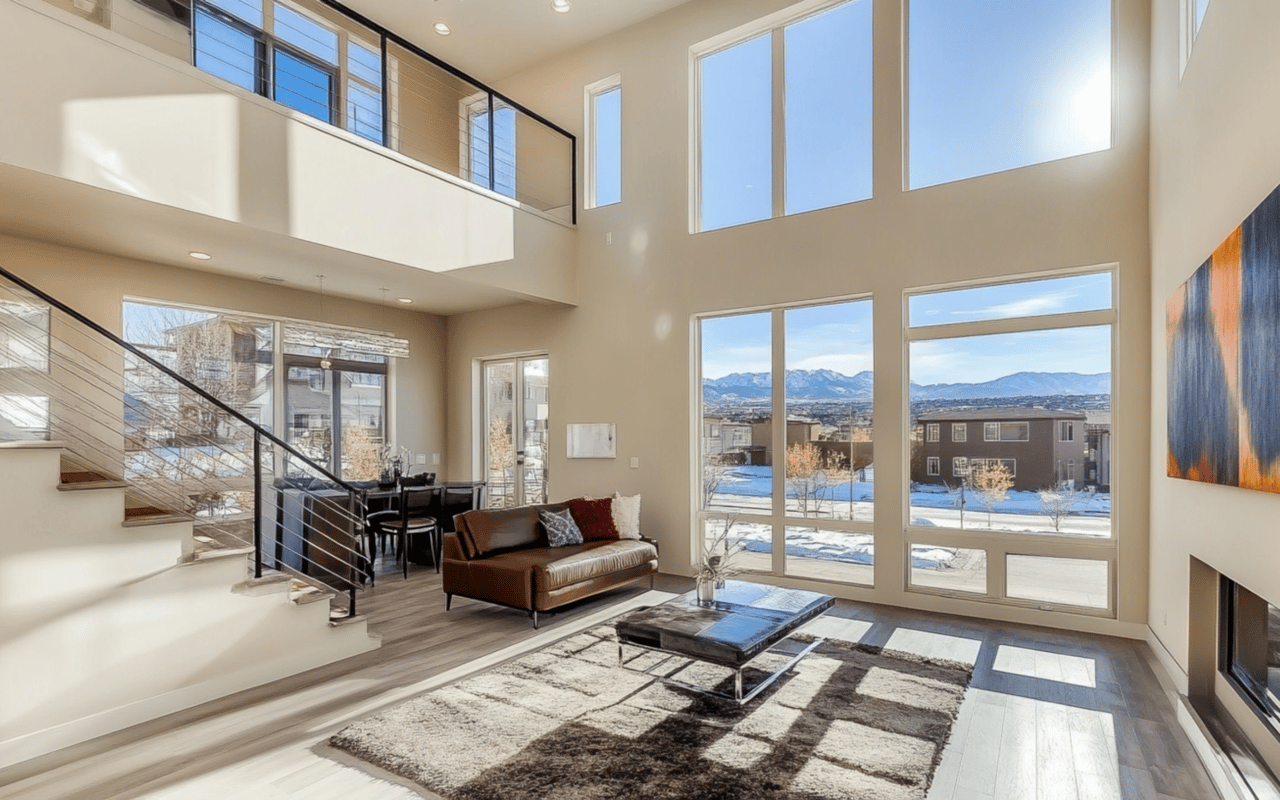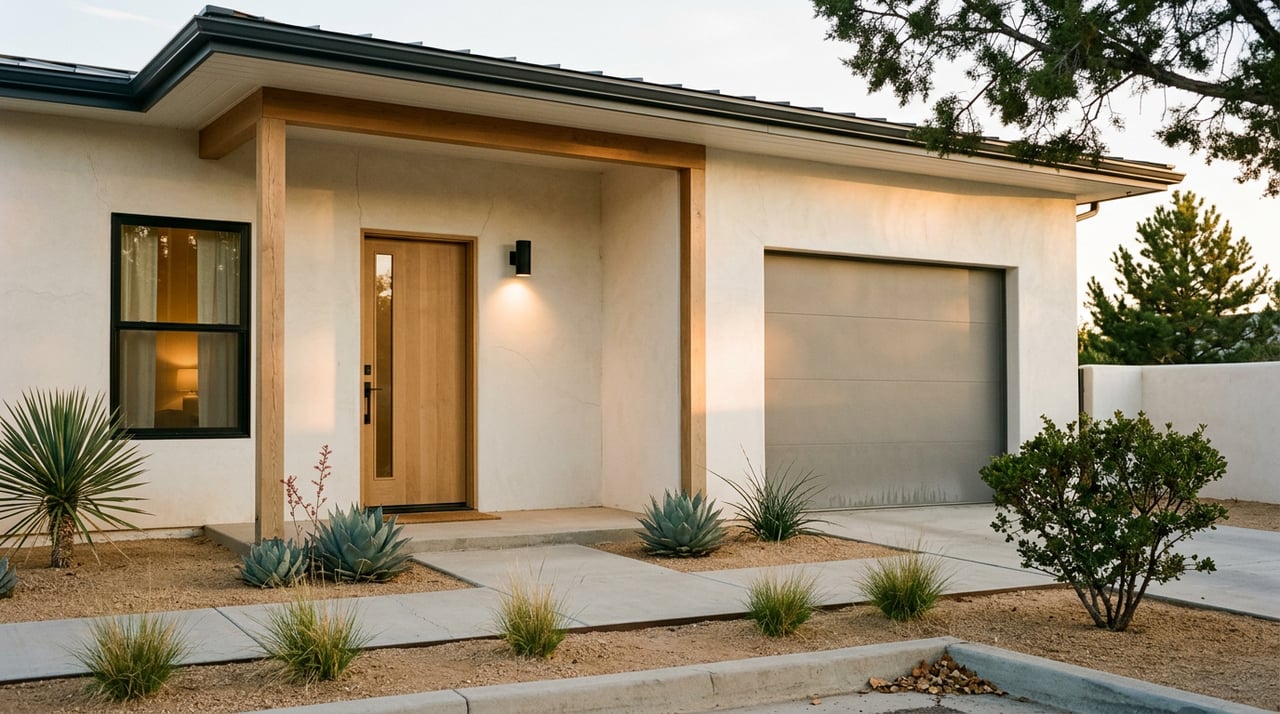
Two listings sit on the portal at $595,000. One is a three-bedroom ranch in Comstock Estates, ten minutes on foot to Reed Park and the Circle Park farmers market setup. The other is a similar-sized home on 2.5 irrigated acres off 19 Road, five minutes north of downtown, with a shop and pasture. Same price, same commute to a coffee, roughly the same square footage. Most buyers assume the difference is lifestyle preference: sidewalk or gravel drive. The actual difference is a utility bill you cannot see on the listing sheet, and it decides which of those two homes is the better deal in a Grand Valley market that has quietly shifted under buyers this summer.
The one line item that reorganizes the comparison
Every Fruita parcel gets irrigation from one of two sources, and they behave nothing alike.
Inside the city limits, irrigation is delivered through a two-valve tap installed by the City of Fruita or through an HOA-managed system inherited from the subdivision developer. The City of Fruita Public Works Department opens the system in the first part of April and shuts it down in late October, with even-numbered addresses watering Tuesday, Thursday, and Saturday and odd-numbered addresses on Wednesday, Friday, and Sunday. Monday is a scheduled maintenance day for line flushing. The homeowner's job is to keep the wye strainer clean and the pump sized correctly. That is the entire operational picture.
Step outside city limits into unincorporated Mesa County and irrigation stops being a tap and starts being an asset. Rural listings quote Grand Valley Irrigation Company (GVIC) shares as part of the sale: a small acreage lot might carry 1 to 4 shares, a working parcel off O Road might carry 26, and the farm-scale tracts near Loma are listed with 42 to 45 shares each. Those shares travel with the deed. They are also the reason two homes at the same list price are not comparable.
A GVIC share is a title-adjacent asset that shows up in the contract, not the utility bill. Miscount it and you are either overpaying for water you cannot use or underpaying for a system you will spend the first summer learning to run.
What roughly $600K delivers on each side of the line
The Fruita median depends on which source you ask, which is itself a signal about how thin the sample is. As of July 2026, Movoto put the Fruita median list price at $545,000 at $301 per square foot. Zillow's Home Value Index for Fruita, updated 6/30/2026, reported $489,487 with homes going to pending in about 25 days. The gap is not a contradiction. It is what happens when a market has fewer than 20 closings in a typical month and the mix swings the median.
Here is what a mid-500s to low-600s budget currently buys once you look past the median:
| Feature | In-town Fruita (Comstock, Stone Mountain, Monument Glen) | Unincorporated acreage (19 Road, O Road, Country Living Acres) |
|---|---|---|
| Lot size | 0.15 to 0.35 acre | 1.5 to 5 irrigated acres |
| Water | City tap or HOA irrigation, flat schedule | 1 to 10 GVIC shares tied to deed |
| Jurisdiction | City of Fruita | Mesa County, sometimes USDA overlay |
| Sewer | Municipal | Septic, buyer inspects |
| Days on market pattern | Well-priced homes pending near the 25-day Zillow figure | Loma-area land listings averaging 75 days |
| Negotiation room | Limited if priced accurately | Meaningful, especially above $500K |
The last row is the one buyers keep missing. Bray & Co.'s market data, reported by The Business Times on July 20, 2026, showed Mesa County finished June 2026 with 912 active listings, the highest June inventory since 2017 and the largest count of any month since September 2018. Sales were down 13.5% year over year. The Colorado Association of REALTORS put the June 2026 Mesa County median at $412,300 with roughly four months of supply. The county has 1,048 active listings in CAR's version of the tally.
Both counts point at the same reality. Inventory is stacking, and it is stacking unevenly.
The above-$500K pile and where the leverage actually sits
CAR's Mesa County commentator flagged the pattern going into 2026: inventory grew in the segment above $500,000 while supply under $500,000 stayed scarce. That has held through the spring and summer. A Fruita in-town buyer at the $500K to $650K band is shopping in the tightest slice of the county, which is why well-presented homes in Comstock or Monument Glen still move on Zillow's 25-day pending timeline. A buyer looking at acreage in the same price band is shopping in the thickest slice, where the seller has been sitting on days-on-market counts closer to 60 in the county overall and 75 for Loma land specifically.
Same budget, different bargaining position. That is the mechanism the median hides.
Freddie Mac's PMMS put the 30-year fixed at 6.30% in mid-April 2026, down from 6.83% a year earlier. Rates are not doing the heavy lifting on either side of the line right now. Inventory position is.
The jurisdiction problem at La Mesa Estates South
La Mesa Estates South is a useful case study because it is being marketed as a Fruita address while sitting under Mesa County and USDA jurisdiction, not the City of Fruita. That is disclosed in the listing language and it matters at three points in a transaction:
- Permitting. Building plan review, setbacks, and inspection schedules run through Mesa County, not the city.
- Utilities. Irrigation is delivered through an HOA rather than a City of Fruita tap, and the sewer conversation is a septic conversation.
- Address and tax status. Some rural splits in the area currently carry listing notes reading "Address, taxes, all TBD" pending the agricultural split being finalized. That is a title-timeline issue, not a listing typo.
None of that shows up in a portal search filter. A buyer who assumes they are buying "in Fruita" because the marketing says Fruita is buying into a different set of rules than a buyer picking up a home in Stone Mountain or the newer West Canyon Fruita build community. Neither is worse. They are different products at overlapping prices, and the contract is the moment the difference becomes real.
The seasonal wrinkle that trips up fall closings
Because the Fruita irrigation season runs early April to late October, a rural buyer who closes in November inherits a dry system. The pump has not run in weeks. The headgate cannot be tested. The share delivery cannot be observed. The functional inspection of the single most valuable non-structural asset on the property is postponed until spring, well past any contingency window.
In-town closings do not carry the same lag. A city-tap system can be pressure-tested against the maintenance schedule during shoulder months, and the maintenance responsibility is shared between the homeowner and Public Works.
For buyers weighing a fall or winter closing on acreage, the response is not to avoid the season. It is to negotiate a spring water walkthrough into the contract, verify the GVIC share certificate against the county's record, and confirm the pump is winterized correctly at possession. Sellers who have owned the property through at least one full irrigation cycle can usually document all three in about an hour.
What this means for your Fruita search
If your budget is $500K to $650K and you want to be walking distance to downtown Fruita, Reed Park, and the Colorado Riverfront paths, you are shopping the county's tightest inventory slice. Price accuracy on the seller's side has been strong there. Bring a clean pre-approval, expect competition on the well-presented listings, and treat the city irrigation tap as a feature you are paying a premium for because it retires an entire category of ownership complexity.
If the same budget can flex to acreage a few minutes out, you are shopping the segment with the most negotiation room in the Grand Valley right now. The tradeoff is that you are also buying a small water utility. Learn the share count, learn who delivers it, and read the HOA covenants at developments like La Mesa Estates South before you fall for the view.
The trail access argument, which is the reason most buyers put Fruita on the list in the first place, does not actually favor one side of this line. The North Fruita Desert and 18 Road system, the Kokopelli Loops, and the Lunch Loops are all reachable from either an in-town garage or a rural driveway in under twenty minutes. That is not the deciding factor. The water is.
FAQ
Can I add GVIC shares later if the property I want has too few? Shares can be transferred, but they are traded between landowners rather than sold at a counter. Availability is thin and pricing is deal-specific. Assume the share count on the deed is the share count you will own for the foreseeable future and price the property accordingly.
Does an HOA-managed irrigation system inside Fruita behave like a city tap or like GVIC shares? Closer to a tap in operational terms, closer to shares in cost structure. The HOA sets the watering schedule and handles breaks, but the annual assessment is a fixed line item you inherit. Ask for two years of HOA financials before you write, especially if the subdivision is younger than ten years.
Is a fall closing on acreage a dealbreaker? No, but it changes the checklist. Add a spring water walkthrough to the contract, confirm the GVIC share certificate matches the county record, and get the winterization documented in writing at possession.
The Fruita median tells you almost nothing on its own. Where you land relative to the city-tap line, and how many GVIC shares are stapled to the deed, tells you almost everything. If you are comparing two Fruita listings at similar prices and cannot explain why one is a better buy in one sentence, that is the conversation to have before you write an offer.
When you are ready to walk properties on both sides of that line with a builder-aware read on what each system actually costs to own, The Maves Group is set up for exactly that comparison. Start Your Move with Maves.